


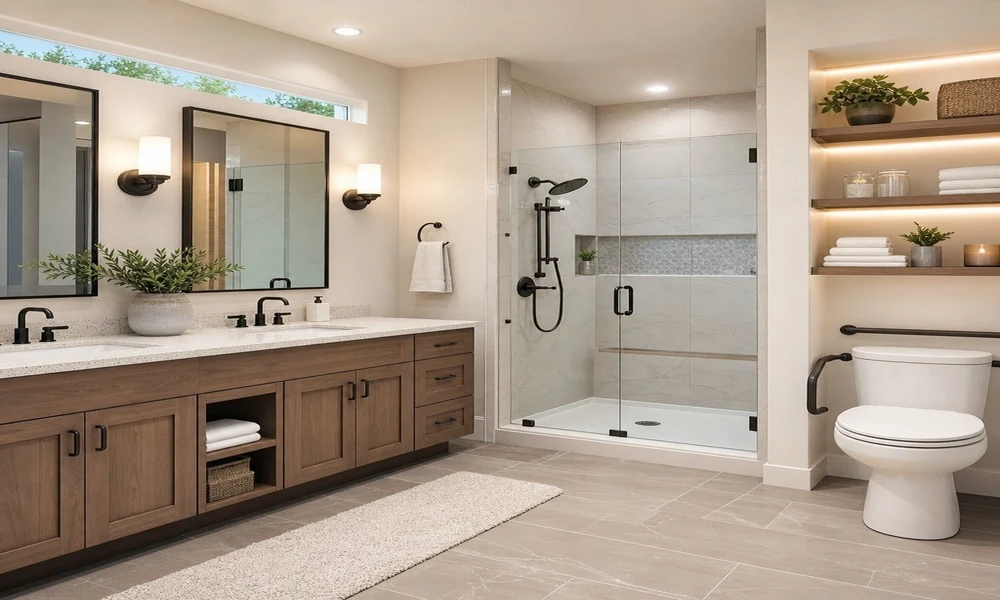
bathroom remodeling priority list with storage lighting and safety upgrades
Bathroom remodeling can make your daily routine more accessible, easier to keep clean, and more comfortable. A bathroom renovation can also give you more convenient storage, safer flooring, better lighting, and a fresher appearance. However, bathrooms involve plumbing, electrical components, moisture management, and small layouts, so a bathroom renovation begins with a plan. A bathroom renovation contractor can bring design concepts into practical alignment.
Identify the problem
Look beyond tile options and fixture finishes to assess what isn’t working now. Is your shower cramped? Does your vanity have insufficient storage? Is the room dark, outdated or difficult to clean?
These daily issues should drive your bathroom remodel design decisions. A pretty bathroom that isn’t convenient to use can be frustrating. A big tub might seem inviting, but it might waste space if you don’t bathe often. A double vanity can be useful in a double-occupancy bathroom, but it might feel crowded in a small room.
To stay focused on your goals, create a simple priority list:
- More storage
- Better lighting
- Larger shower area
- Improved ventilation
- Easier maintenance
- Safer flooring
- Updated fixtures
This can help you establish requirements versus optional upgrades in the event that the budget becomes limited.
Why a bathroom renovation contractor is important
Bathroom remodeling projects might not appear to be complex at first glance. Yet the plumbing fixtures, drains, pipes, wiring, sealing, framing and ventilation behind walls and under floors can require skilled attention. If not done carefully, issues with leaks, mold, falling tiles or water damage, and there is a good rundown at www.fema.gov/press-release, can develop over time.
The expertise of a bathroom renovation contractor can help you understand layout and design requirements and the proper sequence of construction to avoid problems. They can also help you understand which alterations will require additional work to move plumbing and wiring.
“Most successful bathroom remodeling projects are won in the planning phase,” Daniel Mercer, a residential remodeling project manager, told us. “Layout, sealing and ventilation are as important as the finish work people see right away.”
Such advice can help you use your budget in the most impactful way.
Establish your bathroom remodeling budget
Bathroom renovation costs can depend on the size of the space, labor and materials, and the extent to which the layout will change. Keeping the toilet, shower area and vanity in roughly the same location can keep the cost down, while moving the plumbing fixture locations can add cost.
Your budget shouldn’t be limited to tile and fixtures. Consider construction and disposal fees, permits, plumbing work, electrical updates, sealing, ventilation and labor costs. It is also smart to allocate additional costs for unexpected expenses in case water damage is found during demolition.
When looking at different proposals, compare the details of each. A lower bid might not include as much construction preparation, materials or finish work as a higher proposal.
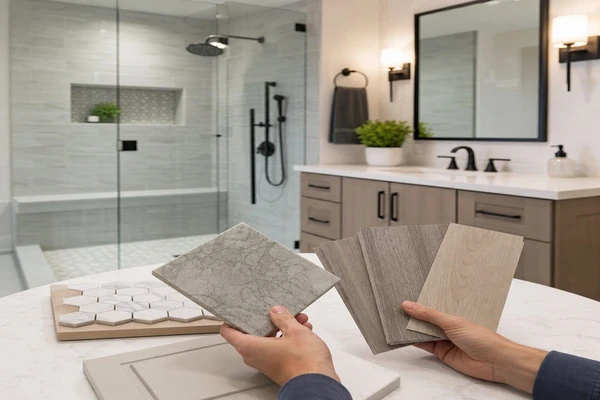
water resistant bathroom materials for shower vanity and flooring
Use water-resistant materials for the long haul
A bathroom has steam, drips, splashes, cleaning products and constant use. Materials should be picked for practicality and longevity as well as appearance. Select waterproof floor coverings that also provide grip. Choose shower walls with suitable substrate and sealing. Use a vanity designed to withstand the humidity.
Your focus should include:
- Quality sealing
- Appropriate ventilation
- Washable finishes
- Practical fixtures
- Task lighting
Trendy finishing touches can add style and personality to your room. But the basics will provide long-term stability to your bathroom renovation project.
Enhance layout without making things too complicated
Not every bathroom project requires a redesign. Even simple changes can have big impacts. You might get more floor space using a smaller vanity. You might have easier access with a walk-in shower. Niche shelving can make use of existing wall space without making a bathroom look crowded.
Good lighting is a common bathroom renovation upgrade. Many bathrooms have just a single center-mounted light, but this can leave dark areas around a vanity. Multiple light sources can make it easier to see for grooming, and help the room appear more appealing.
Ventilation shouldn’t be an afterthought. An appropriately sized exhaust fan, and there is more on a fantastic read, helps control moisture, which can affect materials and finishes.
Before you get started
Clear communication will help make your renovation run more smoothly. Verify timelines, work hours, payment arrangements and selections, and understand the change order process. Ask about when the plumbing fixture water may be turned off and how long your bathroom might be out of service.
Try to make your selections, including finishes and fixture choices, before the demolition phase begins. Changing designs, tile choices and fixtures after the renovation has begun might increase costs and extend the timeline.
Design for performance
A well-executed bathroom remodeling project balances aesthetics, functionality and building requirements. With a set goal, water-resistant materials, and a good bathroom remodeling contractor, you can establish a renovation that looks good and provides a great bathroom experience.
