


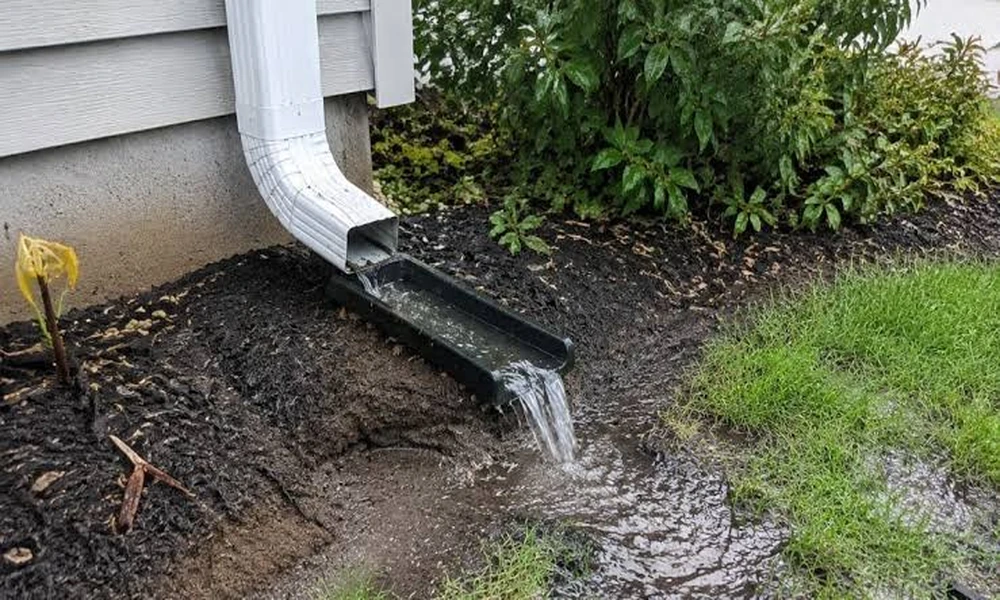
A downspout seems like the simplest part of a house. It is a pipe that carries water from the gutter to the ground. But where that pipe ends decides whether the water helps your yard or harms your home. Too many downspouts empty right at a wall, onto a driveway or into a neighbor’s lawn. Three questions can help you choose a better ending.
Whether you plan to adjust what you have or look into an Autin custom downspout, it helps to answer these questions first. After them comes a simple seven step method for doing the job.
Question One: Is There a Safe Place for the Water?
The Oklahoma State University Extension fact sheet on disconnecting residential downspouts lays out some rules of thumb. Each downspout needs a suitable receiving area inside your own property lines. Water should drain away from the foundation and from neighboring properties, at least 2 feet from any crawl space and at least 6 feet from basement walls.
The sheet also warns against draining over septic systems, drain fields or old underground tanks. Walk your yard and look for a lawn, garden or planted bed that fits these conditions.
Question Two: How Much Roof Does This Downspout Serve?
The fact sheet suggests that each downspout should drain no more than 1,000 square feet of roof. Large roofs with a single downspout may need another one, or a different layout. This is where a professional can help, since gutters and downspouts work as a system.
Question Three: What Is Your Soil Like?
Soil decides how quickly water soaks in. The fact sheet groups soils by clay content. Soils under about 20 percent clay suit simple disconnection onto a lawn or planted area. Soils with more clay, from 20 percent up to over 40 percent, drain slowly and need extra features, such as a rain garden, a swale or rainwater harvesting.
For a quick field check, moisten a handful of soil, roll it into a ball and try to form a ribbon. The sheet says a ribbon that falls apart points to low clay. It also says water should not pond for more than 48 hours after rain. Clay-heavy soils are common in parts of Central Texas, but check your own yard rather than assuming.
The Receiving Area Matters Too
A good landing spot slopes gently away, at 1 to 5 percent according to the fact sheet, and is at least 10 percent of the roof area it serves. It should also sit at least 10 feet from the next hard surface downhill, so water does not simply run back to a driveway or street.
The Seven Step Method
For a do-it-yourself disconnection, the fact sheet outlines these steps:
- Cut the downspout at least nine inches above the ground.
- If it was connected underground, cap the standpipe with a test plug.
- Attach an elbow to the end of the downspout, overlapping it to prevent leaks.
- Attach an extension pipe aimed at the receiving area, overlapping the elbow.
- Secure each piece with sheet metal screws in pre-drilled holes.
- Place a splash block at the end of the extension to prevent erosion.
- Add other stormwater features if your soil needs them.
Keeping It Working
The fact sheet recommends cleaning gutters and removing leaves at least twice a year, more often if trees surround the home. Keep elbows and bends clear, look for holes or gaps, and add hangers if gutters sag.
When Custom Work Makes Sense
Not every house fits the standard pattern. The company behind this article’s link lists custom downspout solutions among its services, alongside seamless gutter installation, leaf guards and cleaning, and says it serves Austin and other Central Texas cities. The site does not describe what custom downspout work involves, so ask for details when you request an estimate.
A Note on Local Rules
The OSU fact sheet says Oklahoma has no regulations specific to residential downspout disconnection. That is Oklahoma’s situation. Texas cities may have their own rules, so check with your city before changing where water drains.
The Takeaway
A downspout is only as good as its last three feet. Pick a safe landing place, match it to your soil and keep it clear, and your gutters will protect the house instead of threatening it.
