


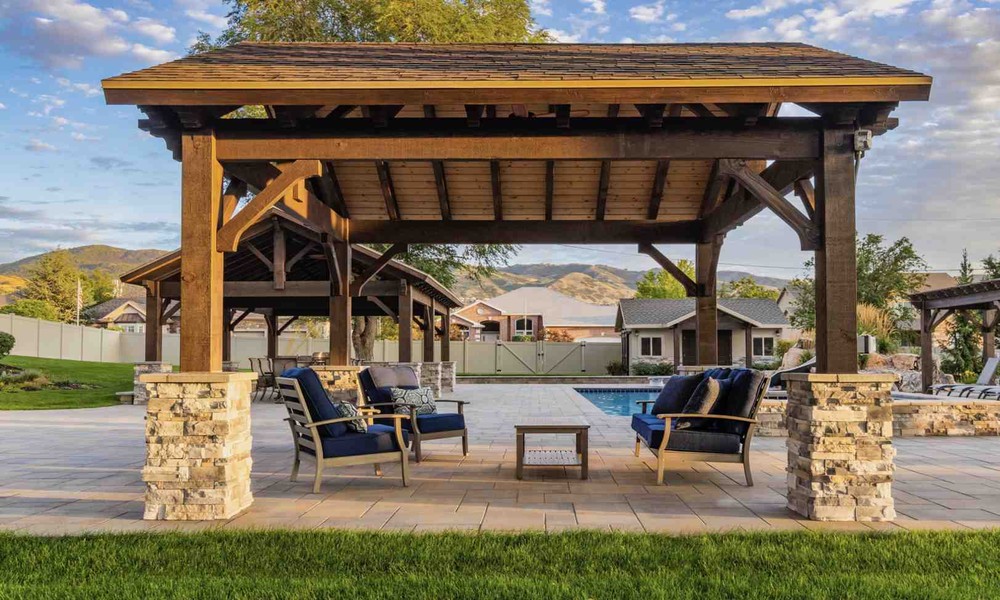
The Strategic Value of Outdoor Living Structures
Imagine transforming your outdoor space into an extension of your home, a versatile retreat where comfort meets nature. Outdoor Living Structures, from elegant pergolas to robust pavilions, are key to achieving this vision, as exemplified by a luxury timber frame pavilion with an outdoor kitchen. These permanent or semi-permanent architectural additions redefine how we interact with our landscapes.
We consider these structures essential for modern property owners seeking to blend indoor amenities with the beauty of the outdoors. They enhance property value, increase usable square footage, and offer weather protection for alfresco dining. This guide will delve into the diverse world of Outdoor Living Structures, setting the stage for thoughtful design and lasting enjoyment.
Our research highlights the growing importance of these installations, with the global market valued at USD 2.32 billion in 2024. This sector is projected for significant growth as homeowners increasingly prioritize wellness and versatile entertaining areas. Core benefits include: enhanced property valuation, increased usable square footage, weather protection for alfresco dining, and aesthetic focal points for garden design. An accompanying infographic further details the projected 2025-2030 market growth and shifts in regional demand.
The allure of outdoor living structures stems from a confluence of modern lifestyle shifts and a growing appreciation for integrated indoor-outdoor spaces. We’ve observed a significant post-pandemic trend where homeowners are investing more in their properties, seeking to create versatile environments that cater to relaxation, entertainment, and even remote work. This demand is further fueled by urbanization, where private outdoor sanctuaries become increasingly valuable, and rising disposable incomes allowing for more sophisticated backyard enhancements. The influence of social media also plays a role, inspiring homeowners with aesthetically pleasing outdoor areas that become extensions of their personal brand.
These structures offer profound lifestyle enhancements. They transform underutilized yard space into functional areas for alfresco dining, quiet contemplation, or lively gatherings. Imagine hosting a dinner party under the soft glow of a custom-built pavilion, or enjoying a morning coffee in the dappled shade of a pergola. This not only elevates daily living but also contributes significantly to overall well-being by encouraging more time spent outdoors. For those working remotely, a well-designed outdoor structure can serve as an inspiring “office with a view,” fostering productivity and reducing stress.
From an investment perspective, outdoor living structures are a smart choice. They demonstrably enhance property value, offering a tangible return on investment by increasing functional square footage and curb appeal. Buyers are increasingly drawn to homes that offer ready-made outdoor amenities, viewing them as valuable assets. The global market for these structures is robust, with a projected growth from USD 2.32 billion in 2024 to USD 3.35 billion by 2030, indicating strong and sustained demand, as detailed in recent market analyses such as this comprehensive market research report.
Sustainability is another key driver. Many consumers are seeking eco-friendly and energy-efficient options, which influences material choices and design. Beyond individual homeowners, the commercial sector, including hotels and resorts, is also investing heavily in these structures to enhance guest experiences with outdoor lounges, fire pits, and event pavilions. This broad adoption underscores the undeniable strategic value of integrating outdoor living structures into our built environments.
Furthermore, these structures contribute to architectural cohesion, seamlessly blending with existing home designs when thoughtfully planned. They offer multi-seasonal utility, with features like integrated heating or cooling systems extending their use beyond fair-weather months. For those seeking to elevate their outdoor spaces with durable and attractive additions, exploring options from reputable providers known for their commitment to landscape maintenance and hardscaping can provide excellent solutions. The North American market, in particular, has shown strong leadership, dominating the global market with a 42.9% revenue share in 2024, reflecting a deep-seated cultural appreciation for expansive and well-appointed outdoor spaces.
Comparing Pergolas and Pavilions as Outdoor Living Structures
When considering an outdoor living structure, two popular choices often come to mind: pergolas and pavilions. While both enhance outdoor spaces, they serve distinct functions and offer different levels of shelter and aesthetic. Understanding their key differences is crucial for making an informed decision that aligns with your lifestyle and design goals.
Pergolas are characterized by their open-lattice roofs supported by columns or posts. They are designed to provide partial shade, allowing dappled sunlight to filter through. This makes them ideal for defining outdoor dining areas, creating inviting walkways, or offering a framework for climbing plants like wisteria or grapevines. The open nature of a pergola fosters an airy, expansive feel, creating an “outdoor room” sensation without fully enclosing the space. Our custom timber frame pergolas are often sought after for their ability to blend rustic charm with modern functionality, providing a beautiful focal point.
In contrast, pavilions feature a solid, often pitched roof supported by posts, offering complete protection from sun and rain. This makes them perfect for creating fully sheltered outdoor kitchens, comfortable lounge areas, or dedicated entertainment zones. Pavilions provide a more substantial, permanent feel to a landscape, effectively extending the indoor living space outdoors. They are excellent for larger gatherings and can be outfitted with amenities like fireplaces, ceiling fans, and lighting for year-round comfort. For those looking for robust, fully covered outdoor spaces, our backyard pavilions offer unparalleled durability and design flexibility.
The market reflects the popularity of both, with the pergolas/patio segment dominating in 2024, accounting for a significant 64.3% revenue share. However, the pavilions/gazebo market segment is projected to grow at the fastest CAGR of 7.0% from 2025 to 2030, indicating a rising demand for more substantial, weather-protected outdoor areas.
Heres a comparative table to highlight their features:
Feature Pergola Pavilion Roof Type Open lattice or slatted Solid, often pitched Shade Level Partial, dappled Full, complete Weather Prot. Limited (some rain/sun filter) Full (rain, direct sun) Plant Support Excellent for climbing vines Minimal, usually freestanding Footprint Often integrated into existing patios/decks Typically larger, freestanding Gathering Casual dining, walkways, relaxation Formal dining, outdoor kitchens, entertainment Privacy Can be enhanced with curtains/screens Can be enclosed with walls/screens Aesthetic Light, airy, decorative, natural Substantial, architectural, protective For a deeper dive into the array of outdoor structures available and their specific applications, a comprehensive guide can provide further insights into making the best choice for your property. Both pergolas and pavilions offer immense aesthetic versatility, capable of being designed to complement any architectural style, from rustic to contemporary.
Material Durability in Modern Outdoor Living Structures
The choice of material is paramount to the longevity, aesthetic appeal, and structural integrity of any outdoor living structure. While various materials are available, heavy timber stands out for its inherent durability, natural beauty, and sustainable profile. We primarily utilize Western Red Cedar and Douglas Fir, renowned for their exceptional qualities in outdoor applications.
Western Red Cedar, for instance, is naturally resistant to rot, decay, and insect infestations due to its unique cellular structure and natural oils. This makes it an excellent choice for structures exposed to the elements, ensuring a long lifespan with minimal treatment. Its stability means it’s less prone to warping or cracking, maintaining its aesthetic over time. Douglas Fir, another robust timber, offers superior strength and stiffness, making it ideal for large, load-bearing structures where structural integrity is critical.
Our commitment to traditional timber framing techniques further enhances the durability of our structures. Methods like mortise and tenon joinery, secured with wooden pegs, create incredibly strong and resilient connections that can withstand significant forces. These time-honored techniques, often complemented by modern advancements like dovetail connections, result in structures that are not only beautiful but also exceptionally robust and capable of enduring diverse weather conditions. This meticulous craftsmanship is a hallmark of the Custom Utah Outdoor Timber Frames we create, designed to stand the test of time.
Beyond durability, timber offers unique thermal properties. Wood is a natural insulator, meaning it helps regulate temperature more effectively than metal or synthetic materials. In hot climates, timber structures remain cooler to the touch, and in colder conditions, they retain warmth better, contributing to a more comfortable outdoor experience. This natural thermal insulation is a significant advantage for multi-seasonal use.
Sustainable sourcing is also a key consideration. Both Western Red Cedar and Douglas Fir are renewable resources, and when sourced responsibly, timber is an environmentally friendly choice. Its production requires less energy compared to other building materials, and at the end of its long life, timber can be recycled or biodegraded.
While timber structures do require some maintenancesuch as periodic cleaning and sealing to preserve their finish and enhance their natural resistancetheir aesthetic aging is often celebrated. As timber weathers, it develops a beautiful patina that can enhance the character of the structure, blending it more harmoniously with the natural landscape. This combination of strength, beauty, and sustainability makes heavy timber an unparalleled choice for durable and aesthetic outdoor living structures.
Regional Design and Climate Resilience
The design and material selection for outdoor living structures must be acutely sensitive to regional climates and environmental conditions. What thrives in one part of the world may quickly deteriorate in another. This geographical nuance significantly impacts market trends, material choices, and construction techniques.
North America, for example, represents a substantial portion of the global outdoor living structures market, holding a 42.9% revenue share in 2024. This vast continent encompasses diverse climates, from the heavy snow loads of Utah and the Pacific Northwest to the intense humidity of the Southeast and the arid heat of the Southwest. Structures in these regions must be engineered to withstand specific challenges: robust framing for snow, rot-resistant materials for humidity, and UV-protective finishes for intense sun. Wind resistance and seismic standards are also critical considerations in many areas, necessitating professional engineering and adherence to local building codes.
Conversely, the Middle East & Africa market is projected to grow at the fastest CAGR of 7.8% from 2025 to 2030. In these regions, where extreme heat and sun are prevalent, the primary design considerations shift towards maximizing shade, promoting airflow, and utilizing materials that remain cool to the touch. Louvered roof options, often motorized, are popular for their ability to adjust shade levels throughout the day, while cooling systems and strategic site orientation help mitigate high temperatures.
Seasonal adaptability is a universal concern. In areas with distinct seasons, integrating features like outdoor heaters, fire pits, and even retractable screens can extend the usability of a structure into cooler months or protect against insects in warmer ones. For instance, a timber pavilion in a four-season climate might incorporate radiant heaters and wind-blocking panels, while a coastal pergola might focus on corrosion-resistant hardware and materials that can withstand salt spray.
Landscape integration is also key. Structures should not only perform well in their environment but also complement it. This involves considering the surrounding flora, topography, and existing architectural styles. Local building codes and permitting processes are non-negotiable, often dictating everything from height restrictions and setback requirements to specific material approvals and structural calculations. Professional installation, especially for custom timber frames, ensures that these complex regional and structural requirements are met, guaranteeing safety, longevity, and compliance.
Frequently Asked Questions About Outdoor Living Structures
As interest in enhancing outdoor spaces grows, so do the questions surrounding these significant investments. Here, we address some of the most common inquiries we receive about outdoor living structures, focusing on practical considerations for homeowners.
What is the average cost of a timber structure?
The investment in a timber outdoor living structure can vary widely, making it difficult to provide a single “average” cost. Several factors significantly influence the final price:
- Size and Complexity: Larger structures with intricate designs, multiple features (e.g., built-in seating, outdoor kitchens, fireplaces), or unique architectural elements will naturally cost more than smaller, simpler designs.
- Material Quality: While we prioritize high-quality timber like Western Red Cedar and Douglas Fir, even within these categories, there can be variations in grade and finish. The choice of roofing material (shingles, metal, polycarbonate) also affects cost.
- Customization Variables: Highly customized designs, tailored to specific site conditions or aesthetic preferences, will incur higher design and fabrication costs compared to standard or kit-based options.
- Labor Costs: Professional installation by skilled craftsmen, especially for complex timber framing, represents a significant portion of the total investment. Labor rates vary by region.
- Site Preparation: Costs can increase if the site requires extensive grading, foundation work, or utility trenching for electricity or plumbing.
- Accessories: Adding features like lighting, ceiling fans, integrated sound systems, or retractable screens will add to the overall cost.
While the initial investment can be substantial, it’s crucial to consider the long-term value. Timber structures, particularly those built with traditional framing techniques, offer exceptional durability and longevity, often outlasting structures made from less robust materials. This translates to lower maintenance savings over time and a higher return on investment when selling the property. We encourage prospective clients to discuss their vision with us to receive a detailed, no-obligation quote tailored to their specific project.
Do these structures require building permits?
In most jurisdictions, yes, outdoor living structures typically require building permits. The exact requirements can vary significantly based on your local municipality, county, and homeowner’s association (HOA). It’s essential to research and understand these regulations before beginning any construction.
Common factors that trigger permit requirements include:
- Size and Height: Structures exceeding a certain square footage or height (e.g., 100-200 sq ft, 10-12 feet tall) almost always require a permit.
- Attachment to Existing Structures: If the outdoor structure is attached to your home (like some patio covers or attached pergolas), it will likely be subject to more stringent permitting and inspection processes.
- Foundations: Structures built on permanent foundations (concrete slabs, footings) are usually considered permanent additions and require permits.
- Utilities: If your structure includes electrical wiring, plumbing, or gas lines for outdoor kitchens or heating, these will require separate permits and inspections.
- Zoning Laws: Local zoning ordinances dictate where structures can be placed on your property, including setback requirements from property lines, other buildings, and easements.
- Safety Standards: Permits ensure that the structure meets local safety codes, including structural integrity, wind load capacity, and, in some regions, seismic standards.
We strongly advise homeowners to consult with their local planning or building department early in the design process. Engaging a professional builder or architect who is familiar with local regulations can streamline the permitting process, ensuring that your design is compliant and that all necessary inspections are passed. Attempting to build without proper permits can lead to fines, forced demolition, or difficulties when selling your property.
How do outdoor structures impact property value?
Outdoor living structures are a proven investment that can significantly enhance property value and appeal. Their impact is multi-faceted:
- Increased Functional Square Footage: While not always counted as interior living space, a well-designed outdoor structure effectively expands the usable living area of a home. This added “outdoor room” is a highly desirable feature for potential buyers.
- Enhanced Curb Appeal: A beautifully crafted pergola, pavilion, or gazebo acts as an attractive focal point, elevating the overall aesthetic of the property. This increased curb appeal can make a home stand out in the market.
- Lifestyle Marketing: Outdoor structures appeal directly to lifestyle aspirations. They suggest a home where relaxation, entertaining, and connection with nature are prioritized. Real estate agents often highlight these features to attract buyers looking for a specific quality of life.
- Higher Appraisal Values: Appraisers typically consider permanent, well-built outdoor structures as valuable amenities that contribute to the overall worth of the property. The quality of materials and craftsmanship plays a significant role here.
- Strong Return on Investment (ROI): While ROI can vary based on location and market conditions, many outdoor living projects, particularly those that are well-integrated and professionally built, offer a strong return. Homeowners often recoup a significant portion, if not all, of their investment upon sale.
- Competitive Edge: In a competitive real estate market, homes with attractive, functional outdoor living spaces often sell faster and at a higher price point than comparable properties without such amenities.
- Aesthetic Differentiation: Custom timber structures offer unique architectural beauty that sets a property apart from mass-produced alternatives, appealing to buyers who value quality and bespoke design.
Investing in a durable and aesthetically pleasing outdoor living structure is not just about personal enjoyment; it’s also a strategic enhancement that can yield considerable financial benefits when it’s time to sell.
Conclusion: Investing in Outdoor Living Structures
As we’ve explored, outdoor living structures are far more than mere additions; they are transformative elements that redefine how we experience and value our homes. From the market’s robust growth to the nuanced differences between pergolas and pavilions, the strategic value of these installations is undeniable. They cater to a modern desire for expanded living spaces, enhanced well-being, and a deeper connection with the natural environment.
The importance of material choice, particularly the enduring strength and beauty of heavy timber, cannot be overstated. When combined with expert craftsmanship and traditional joinery techniques, timber structures offer unparalleled durability, thermal regulation, and a sustainable footprint. Furthermore, thoughtful design that considers regional climate and local regulations ensures that these structures are not only beautiful but also resilient and long-lasting.
Investing in an outdoor living structure is an investment in lifestyle, property value, and future enjoyment. Whether you envision a serene poolside pergola for dappled shade or a grand pavilion for year-round entertaining, the possibilities are vast. We believe that by carefully considering your needs, understanding the options, and partnering with experienced professionals, you can create an outdoor space that truly transforms your property and enriches your life for years to come. The future of home design increasingly embraces the outdoors, and with a well-chosen timber structure, you can confidently step into this exciting trend, enjoying both immediate pleasure and lasting value.
