


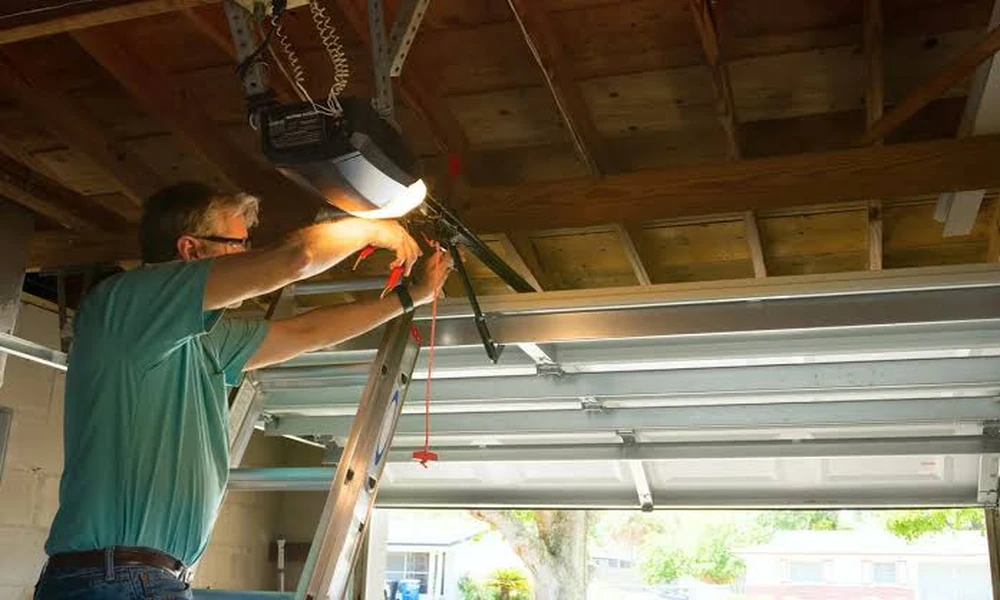
The garage door is the largest moving part in most homes, and it gets used several times a day without a second thought. That is why it fails in annoying ways, like a door that reverses for no reason, rattles on the way up, or lets the cold in around the edges. Some of these problems are easy to fix in ten minutes. Others involve parts under so much tension that a mistake can cause serious injury. This guide sorts common tasks into three groups so you know which ones are fair game and which ones to leave alone.
Before you touch anything
A few ground rules apply to every task. Never stand or put your hands under a door that is moving or partly open. If you need to work on the door, close it fully, unplug the opener, and keep the remote out of reach. Wear gloves and eye protection, keep fingers clear of hinges and joints, and do not work alone if the door is heavy. If anything about a task feels unclear, stop and call a professional. A service visit costs far less than an injury.
Green light: quick fixes anyone can do
Start with the simple stuff, because it solves a surprising number of problems.
- Clean the photo eyes. The small sensors near the floor on each side of the door can get covered in dust, cobwebs, or a smear of dirt. Wipe the lenses with a soft cloth and check that the indicator lights are steady.
- Replace remote and keypad batteries. A door that responds slowly or only from close range often just needs fresh batteries.
- Lubricate moving parts. A light coat of garage door lubricant on rollers, hinges, and springs from a distance reduces squeaking and wear. Use a product made for the job, and keep grease off the tracks, where it collects dirt. Wipe the tracks clean instead.
- Replace the bottom seal. The rubber strip along the bottom edge hardens and cracks over time.
Aurora garage doors deal with seasonal temperature swings that stiffen rubber seals and let drafts, dust, and pests slip in. Replacing the bottom seal and checking the weatherstripping around the sides and top is one of the cheapest ways to improve comfort in the garage. If the door itself is dented, sagging, or poorly insulated, a contractor such as Royalty Construction Corp can help you decide whether repairs are enough or a new door makes more sense, and handle the installation properly.
Yellow light: checks to do with care
These tasks are safe for most homeowners if you follow the steps and stop at the first sign of trouble.
Test the automatic reverse. The Consumer Product Safety Commission urges homeowners in its garage door opener safety guidance to test the opener’s reverse function by placing a 2×4 flat on the garage floor in the path of the door. If the door does not reverse when it touches the board, the opener needs service or replacement. The agency also recommends inspecting the door and opener regularly, about every 30 days, and replacing older openers that do not meet the federal safety standard. Do not use an opener that fails this test.
Test the sensors. With the door open, start it closing and wave an object through the photo eye beam. The door should stop and reverse immediately. If it does not, check the alignment and cleanliness first. If it still fails, call for service.
Check the balance. A well balanced door is easy to lift by hand. With the door fully closed, pull the red emergency release cord to disconnect the opener, then lift the door by hand to about waist height and let go slowly. It should stay roughly in place. If it slams down or shoots up, the springs are out of balance, and that is a job for a professional, not a DIY adjustment. Reconnect the opener following the manual.
Check obvious track problems. If a track has a small dent or loose mounting bolts, tightening the track brackets may be reasonable. If the door is jammed, off its track, or the tracks look bent, stop.
Red light: leave these to a professional
Some parts of a garage door store enormous energy, and they are not worth the risk.
- Torsion and extension springs. These are wound under high tension. Replacing or adjusting them without the right tools and training is a leading cause of garage door injuries.
- Lift cables and bottom brackets. The bottom brackets are connected to cables that are under load. Loosening them can release that tension suddenly.
- A door that is off its track or hanging unevenly. It can fall without warning.
- Broken or cracked panels. A damaged panel weakens the door’s structure and can affect balance.
- Opener replacement and electrical work. These need proper installation, wiring, and safety testing.
A good technician will inspect the whole system, explain what is worn, and test the safety features before leaving. Ask for an itemized quote and clear explanations of what each part does.
Know when repair stops making sense
If your door is more than a couple of decades old, needs repairs again and again, or has widespread dents, rust, or sagging, replacement can be the smarter move. Newer doors offer better insulation, quieter operation, and more reliable safety features. Compare quotes in writing, ask about warranties on both parts and labor, and request that the installer test the auto reverse and sensors before they leave.
Your garage door will tell you when something is wrong if you pay attention. Sort the problem by color, handle the green items yourself, approach the yellow ones carefully, and call for help on the red. That approach keeps the door working and keeps everyone safe.
