


How Homeowners Can Reduce Pest Problems in Hot, Dry ClimatesTable Of Contents
- Why Hot, Dry Weather Changes Pest Behavior
- Start With The Home Exterior
- Control Moisture Around The Property
- Make Food Sources Less Available
- Shape The Yard To Discourage Pests
- Watch For Common Desert Pests
- Use Integrated Pest Management
- Know When To Call For Help
- Build A Simple Home Maintenance Routine
Hot, dry weather can make a home especially appealing to pests looking for dependable water, cooler shelter, and easy food. A prevention plan that focuses on the property as a whole is usually more useful than responding only after insects or rodents appear indoors. Homeowners who need help identifying recurring activity or building a prevention routine can also turn to greenmangopest.com for professional pest-control support.
The goal is not to create a perfectly insect-free yard. It is to make the home less accessible and less comfortable for pests by limiting entry points, moisture, food, and hiding places. Regularly performed maintenance tasks can often prevent a minor issue from becoming a larger one.
Why Hot, Dry Weather Changes Pest Behavior
Heat can change where pests spend their time. When outdoor water is scarce, ants, cockroaches, rodents, and some spiders may investigate homes for moisture and shelter. Air-conditioned interiors, shaded walls, plumbing areas, pet bowls, and irrigation systems can offer more stable conditions than exposed ground.
Weather changes can also shift activity quickly. Rain may leave puddles, damp soil, and plant growth that support insects, while a cool spell can encourage pests to seek protected spaces. Checking the property after storms, irrigation adjustments, or major temperature changes helps homeowners spot new conditions before pests settle in.
Start With The Home Exterior
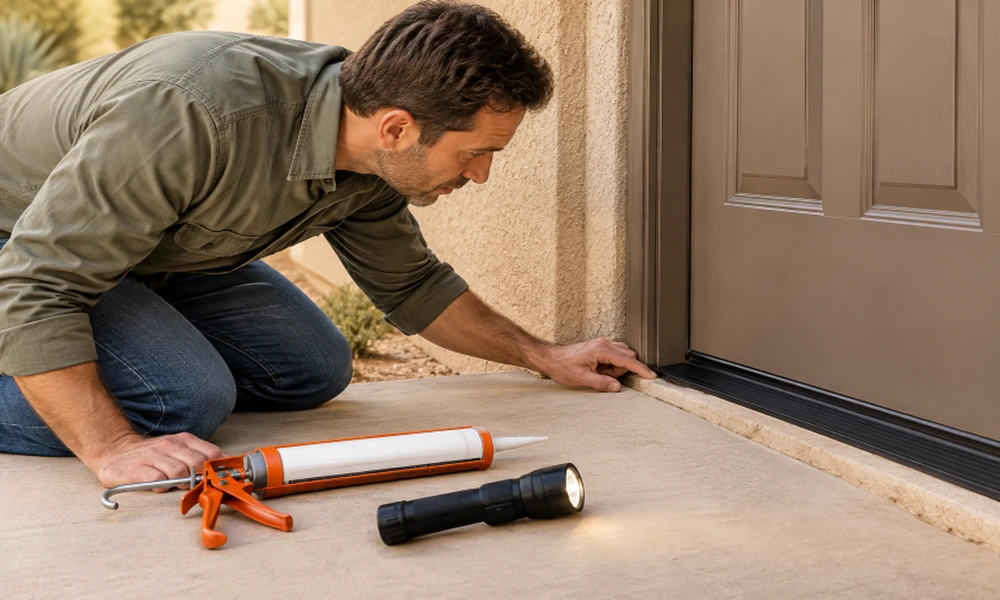
Prevention often starts outside the living space. A clean kitchen will not fully solve a pest issue if insects and rodents can enter through damaged screens, gaps around pipes, or worn seals beneath exterior doors.
Exterior Checkpoints To Cover
- Inspect openings around doors, windows, utility lines, vents, and the foundation.
- Replace worn weatherstripping and door sweeps.
- Repair holes in window, patio, and crawl-space screens.
- Check the garage door seals for visible gaps or daylight.
- Keep roof edges, drainage openings, and vent covers in sound condition.
- Trim branches and climbing plants away from walls and rooflines.
Building guidance on pest-resistant home design recommends sealing openings, screening suitable vents, and managing moisture as complementary ways to reduce opportunities for pest entry.
Control Moisture Around The Property
In a dry climate, even a small and consistent water source can become important to pests. Look for leaks and damp areas that may be easy to overlook, especially around irrigation equipment, air-conditioning systems, and exterior plumbing.
Moisture Sources To Check
- Leaking hose bibs, faucets, and irrigation connections.
- Condensation or drainage near air-conditioning equipment.
- Clogged gutters, blocked downspouts, and pooling near foundations.
- Drip lines that spray or drain directly against exterior walls.
- Overwatered planters, dense ground cover, and shaded soil.
- Outdoor pet bowls, buckets, toys, and water-holding containers.
Mosquitoes can breed in small amounts of standing water. Emptying containers, refreshing pet water frequently, and checking low spots after rain or irrigation are practical habits for reducing that risk.
Make Food Sources Less Available
Pests do not need a large food supply to remain active around a home. Crumbs, unsealed pantry goods, fallen fruit, trash residue, grease around grills, and pet food can all provide a dependable meal.
Simple Food-Control Steps
- Store dry goods in tightly sealed containers.
- Clean spills and crumbs soon after they occur.
- Rinse recycling containers before putting them outside.
- Keep trash lids closed and clean bins when residue builds up.
- Pick up fallen fruit from trees, patios, and garden beds.
- Bring pet food indoors after feeding time.
- Clean outdoor cooking surfaces and grease trays regularly.
Shape The Yard To Discourage Pests
Landscaping can either reduce or increase pressure around the home. Thick vegetation, stacked materials, clutter, and persistently damp corners may provide pests with places to hide, nest, or move unnoticed.
- Keep mulch and soil from resting directly against exterior walls.
- Store firewood away from the house and raised off the ground.
- Remove unused boxes, boards, pots, and yard debris.
- Prune shrubs so air can circulate between plants and walls.
- Correct low areas where irrigation water repeatedly collects.
- Use outdoor lighting thoughtfully because many flying insects gather around lights.
The purpose is not to eliminate plants or beneficial insects. It is to reduce the conditions that make the property an easy place for pests to feed, hide, or reproduce.
Watch For Common Desert Pests
Early detection gives homeowners more options. A single sighting may not indicate an infestation, but repeated signs, activity in several areas, or visible damage deserve closer attention.
- Ants: Trails near sinks, doors, windows, and pet bowls.
- Rodents: Droppings, gnaw marks, scratching sounds, or disturbed insulation.
- Cockroaches: Droppings, shed skins, odors, or activity around plumbing.
- Termites: Mud tubes, discarded wings, hollow-sounding wood, or damaged trim.
- Spiders: Webs around lights, eaves, storage areas, and quiet corners.
- Mosquitoes: Persistent biting activity near standing water or shaded areas.
Use Integrated Pest Management
Integrated pest management, often called IPM, combines inspection, prevention, monitoring, physical controls, sanitation, and carefully selected treatments. The EPA’s IPM principles emphasize identifying pests, preventing problems, and considering lower-risk controls before broader pesticide applications.
A Practical Four-Step Process
- Identify: Confirm the pest before choosing a response.
- Remove: Address food, water, clutter, and access points.
- Monitor: Use visual checks, traps, or other appropriate methods.
- Treat Carefully: Follow product directions and use a targeted option suited to the problem.
Know When To Call For Help
Routine maintenance has limits. Professional inspection may be appropriate when pests appear to be entering from hidden areas, returning after repeated cleanup, damaging the structure, or creating a health or safety concern.
- Droppings reappear after cleaning.
- Fresh damage appears on wood, wiring, insulation, or stored belongings.
- Pests are active repeatedly in multiple rooms.
- DIY treatments provide only brief improvement.
- Children, pets, or sensitive household members could be exposed to unsuitable products.
Before treatment, ask about preparation steps, product labels, reentry guidance, ventilation needs, and ways to protect food and pets.
Build A Simple Home Maintenance Routine
Small checks are easier than emergency cleanup. Each month, inspect door seals, screens, visible gaps in the foundation, irrigation lines, outdoor faucets, under-sink areas, and storage spaces. Clear yard debris and look behind appliances for signs of moisture or pests.
Seasonally, inspect drainage paths, roof edges, gutters, firewood, patio furniture, cardboard storage, and plants growing near walls. After heavy rain or changes in irrigation, check again for standing water and new pest activity.
Conclusion
A pest-resistant home does not require constant spraying or major remodeling. Sealing entry points, controlling moisture, properly storing food, reducing outdoor shelter, and watching for early signs can make a meaningful difference. In hot, dry climates, consistent prevention helps homeowners respond before a small pest problem becomes a costly one.
