


Table of Contents
- Essential Oils as Natural Repellents
- DIY Fly Traps
- Diatomaceous Earth for Insect Control
- Herbal Barriers
- Maintaining Cleanliness
- Sealing Entry Points
- Using Natural Predators
- Conclusion
Maintaining a healthy, pest-free home environment does not have to involve harsh chemicals or unsafe treatments. Increasingly, homeowners are seeking effective alternatives that protect families and pets while keeping unwanted critters out. By integrating natural and practical methods, you can create a living space that is both welcoming and safe. For additional tips and professional assistance, visit pointepest.com. These eco-friendly approaches can help reduce pest activity while supporting a healthier indoor environment for everyone in the household.
Non-toxic pest prevention focuses primarily on safeguarding your family’s well-being and nurturing the environment. These innovative strategies are suitable for everyday use, and many options are both accessible and budget-friendly. The following guide explores proven ways to manage pests naturally and highlights steps every homeowner can easily implement.
Instead of relying on conventional pesticides, modern pest control strategies often use items found in your kitchen or garden. With a little effort, you can deter common pests such as ants, flies, mosquitoes, and mice without undermining indoor air quality. A simple yet consistent application of natural remedies can yield excellent, long-lasting results.
Homeowners who emphasize prevention and routine maintenance typically experience far fewer pest problems. Keeping your space clean, addressing entry points, and taking advantage of nature’s best repellents leads to a safer, more comfortable home.
Essential Oils as Natural Repellents
Essential oils such as peppermint, lavender, and eucalyptus not only fill your home with pleasant scents but also serve as reliable pest deterrents. Ants, spiders, and mosquitoes are especially sensitive to these oils’ potent aromas. Creating an essential oil spray is simple: fill a clean spray bottle with water, add 10 to 15 drops of your preferred oil, shake well, and spray along windows, doorways, or any spots pests seem to invade.
Using essential oils is an ongoing process; regular application is the key to maintaining protection. This gentle yet effective remedy keeps your living space free from chemical residues and unnecessary hazards.
DIY Fly Traps
Flies present a challenge indoors and out, particularly during summer. Fortunately, an efficient remedy is often already in your recycling bin. Use a plastic bottle by cutting off the top and inverting it to make a funnel. Pour sugar water and a few drops of dish soap into the base. Attracted by the scent, flies enter but then cannot escape, effectively reducing their numbers without chemicals.
This is a truly cost-effective and environmentally-friendly approach that you can set up in minutes. Placing these traps near food prep areas or patios is especially helpful during peak fly season, making daily life more pleasant.
Diatomaceous Earth for Insect Control
Diatomaceous earth (DE) is a natural, non-toxic powder made from fossilized algae that works by dehydrating and killing crawling insects such as cockroaches, ants, and bedbugs. To apply, sprinkle a thin layer in corners, crevices, and behind appliances or furniture where insects frequent. Focus on food-grade DE, which is safe for both pets and people.
DE is best applied to dry surfaces and should be reapplied after cleaning or if the powder becomes wet. Proper use of this mineral substance can make a significant dent in persistent insect problems while preserving indoor well-being.
Herbal Barriers
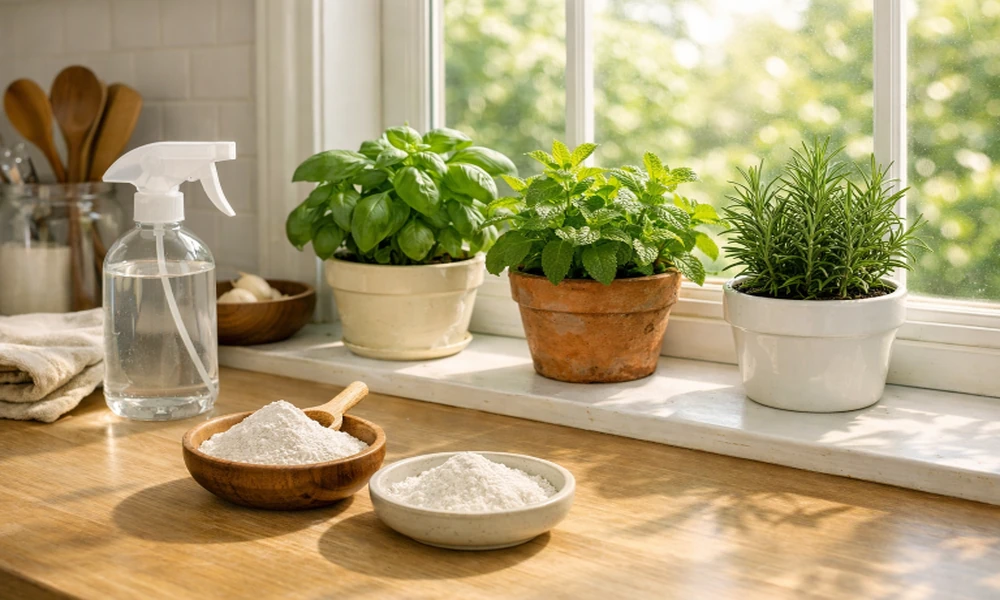
Your garden or kitchen windowsill may already contain some of the most effective pest barriers nature provides. Planting herbs such as basil, rosemary, and mint deters a wide variety of pests. Basil repels mosquitoes and common flies, rosemary acts as a broad insect deterrent, and mint helps drive away ants and even mice.
Keeping pots of these herbs near entryways works on two fronts, enhancing your cooking while safeguarding your home. Plus, their lush appearance provides a natural decorative touch that pairs usefulness with style.
Maintaining Cleanliness
A clean environment is one of the simplest and most effective ways to make your home less attractive to pests. Consistently wipe down surfaces, store leftovers in sealed containers, dispose of garbage promptly, and vacuum or mop floors frequently to remove crumbs and spills.
Small, daily acts such as cleaning up after meals and keeping counters tidy deny pests the food and water they need to thrive. Over time, these habits reduce the likelihood of attracting new infestations and help you sustain a pest-free home.
Sealing Entry Points
Physical barriers remain at the heart of effective pest management. Check windows and door frames for gaps, and seal them with weatherstripping or caulk. Repair any holes in window screens and address cracks along your home’s foundation or walls. This limits pests’ access to your living space and reduces the need for reactive treatments later.
Routine inspections of your home’s perimeter and prompt repairs are essential. A weekend spent sealing entry points can prevent months of unwanted visitors and make a noticeable difference in overall home comfort.
Using Natural Predators
Nature offers even more support in pest control. Introducing ladybugs into your garden, for instance, helps combat aphids naturally. Installing birdhouses draws insect-eating birds to your yard, reducing bug populations around your outdoor living spaces.
These ecological approaches do more than protect your home; they enhance biodiversity and create a balanced, vibrant yard. Healthy predator populations maintain local ecosystems and can prevent pest outbreaks before they occur.
Conclusion
Adopting non-toxic pest management strategies protects your family, pets, and the environment. By relying on essential oils, DIY traps, diatomaceous earth, herbal deterrents, clean habits, sound home maintenance, and natural predators, you create a comprehensive barrier against pests. Embracing preventative routines and natural remedies leads to a healthier, more secure home, without the drawbacks of harsh chemicals.
